
Relationships & Personality Disorders: Part 1
“Narcissists have a tough job because perfection is viewed as either all or nothing: If you are not perfect, you are imperfect, and if you are imperfect, you are nothing.” ― Theodore Millon, Personality Disorders in Modern Life
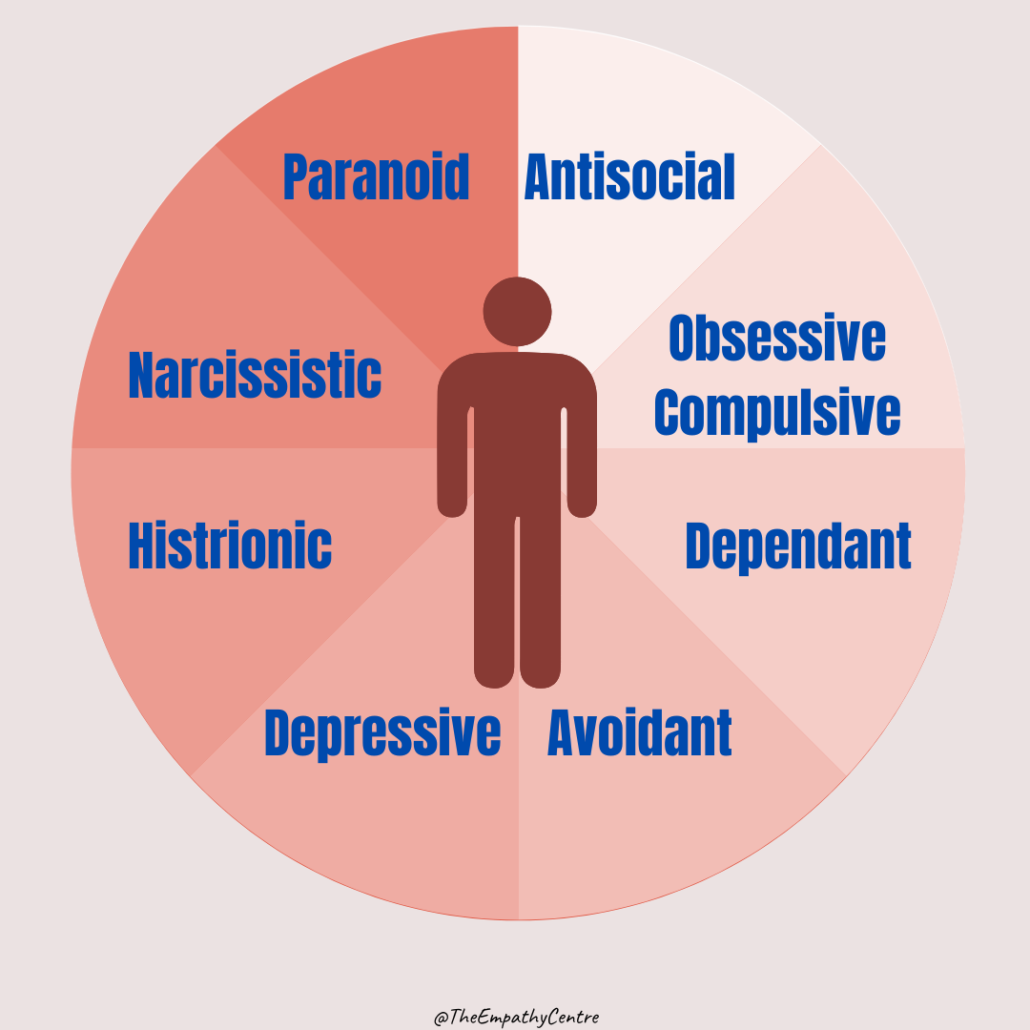
An estimated 4.4% of the adult population in the UK, or roughly one in 23 people, suffers from a personality disorder. Many of these individuals may remain undiagnosed, as access to specialist services for personality disorders is limited. In the United States, research suggests that approximately 9-15% of the adult population may suffer from some form of personality disorder. However, like in the UK, a significant number of these individuals remain undiagnosed, which could be due to stigma, lack of awareness, or limited access to mental health care services. In the Diagnostic and Statistical Manual of Mental Disorders, 5th edition (DSM-5) personality disorders are divided into three ‘clusters’ based on similar characteristics and behaviours, with each cluster representing different patterns of thinking and potential compulsions.
Cluster A: These disorders involve odd, eccentric thinking or behaviour and includes Paranoid Personality Disorder characterized by pervasive distrust and suspicion of others. Schizoid Personality Disorder can cause detachment from social relationships and limited emotional expression. Schizotypal Personality Disorder involves discomfort in close relationships, distorted thinking, and eccentric behaviour.
Cluster B: Involves dramatic, overly emotional, or unpredictable behaviours and includes Antisocial Personality Disorder characterized by disregard for the rights of others, impulsivity, and a lack of empathy. Borderline Personality Disorder involves instability in relationships, self-image, and emotions, with impulsivity and fear of abandonment. Histrionic Personality Disorder marked by excessive emotionality and attention-seeking behaviour. Narcissistic Personality Disorder characterized by grandiosity, a need for admiration, and a lack of empathy.
Cluster C: These disorders involve anxious, fearful thinking or behaviour, including Avoidant Personality Disorder characterized by feelings of inadequacy, extreme sensitivity to criticism, and social inhibition. Dependent Personality Disorder a pervasive need to be taken care of, leading to submissive and clingy behaviour. Obsessive-Compulsive Personality Disorder can manifest itself by a preoccupation with orderliness, perfectionism, and control (note that this differs from Obsessive-Compulsive Disorder, OCD).
These categories help clinicians better understand and diagnose personality disorders by grouping them based on similarities in behaviour and symptoms.
Identifying someone with a potential personality disorder can be challenging due to subtle traits appearing as typical human behaviours. People with a variety of mental health conditions can seek romantic relationships for various reasons, including validation, control, fear of abandonment, or fulfilling emotional needs. These motivations can vary depending on the disorder but are often rooted in emotional and psychological patterns:
- Those with Narcissistic Personality Disorder frequently seek validation and admiration.
- People with Borderline Personality Disorder may seek to escape feelings of emptiness and abandonment
- Individuals who have Dependent Personality Disorders can seek security and stability.
- Those with Obsessive-Compulsive Personality Disorders can seek control and order.
- Individuals who have Antisocial Personality Disorders may seek power or material gain.
Coping mechanisms are strategies individuals use to manage stress, emotional challenges, or difficult situations. For people with personality disorders, these mechanisms often take on unique forms due to their distorted patterns of thinking, feeling, and behaving. In general, they may rely on maladaptive coping mechanisms which can include denial, projection, or avoidance. These coping mechanisms, while protective in the short term, often exacerbate interpersonal problems and emotional instability in the long term often leading to complex and dysfunctional dynamics.
Narcissists
“Narcissistic Personality Disorder is named after Narcissus, from Greek mythology, who fell in love with his own reflection. Freud used the term to describe persons who were self-absorbed, and psychoanalysts have focused on the Narcissist’s need to bolster his or her self-esteem through grandiose fantasy, exaggerated ambition, exhibitionism, and feelings of entitlement.” ― Donald W. Black, DSM-5 Guidebook: The Essential Companion to the Diagnostic and Statistical Manual of Mental Disorders
Narcissists, psychopaths, and sociopaths share certain personality traits, although there are distinct disorders with unique characteristics. One commonality is a lack of empathy, as all three exhibit an impaired ability to understand and connect with the experiences of others. They may disregard or manipulate others for personal gain, showing little remorse or guilt for their actions. Additionally, all three may exhibit grandiosity and an inflated sense of self-importance, seeking admiration and validation from others, impulsivity, and risk-taking behaviours, although Narcissists, while not always typically impulsive, may still engage in unwise activities if they believe it will enhance their self-image or serve their own interests. While there can be overlapping traits with each disorder, each has its own distinct set of diagnostic criteria. The level of potential danger and harm caused can vary within each category. A comprehensive evaluation by a qualified mental health professional is necessary to accurately diagnose and differentiate between these conditions. With regards to Narcissists, they can be found across every spectrum of social and economic strata, and many hold positions of influence or power. They often seem to be very successful or well-respected in their communities. They can also appear to be happy in their partnerships, married, and have families. But the pain, abuse, and suffering caused by individuals with a mix of highly toxic narcissistic personality traits are hidden behind closed doors and a very carefully crafted positive image. The Diagnostic and Statistical Manual of Mental Disorders (DSM-5) provides diagnostic criteria for Narcissistic Personality Disorder (NPD) based on the presence of specific traits. According to the DSM-5, a person must exhibit at least five of the following nine criteria to be diagnosed with NPD:
The Nine Official Characteristics of a Narcissist
- Arrogant or haughty attitude. Displays an attitude of superiority and a condescending manner towards others.
- Sense of entitlement. Expects unwavering compliance or favourable treatment from others.
- Exploits others without guilt or remorse. Difficulties in maintaining satisfying and healthy relationships, often characterised by severe interpersonal mistreatment.
- An intense need for admiration.
- A belief that they are special and can only be understood by other exceptional people.
- Exaggerated or grandiose sense of importance that is not evidenced by actual reality.
- A preoccupation with fantasies of extraordinary success, wealth, power, beauty, or love.
- Envious of others or assume others are envious of them.
- Absence of empathy
They frequently possess good social skills and are often charming, charismatic, and full of energy, which helps them make a good first impression. However, Narcissists always have a motive when they entice someone into a fantasy, which is ultimately doomed to fail. Their motivation to become romantically involved with anyone has absolutely nothing to do with any genuine feelings of attraction or love because all of their “relationships” are purely transactional. The male narcissist generally seeks sex or a very attractive woman as a trophy and/or a provider; a female narcissist often pursues a potential partner to provide material gifts, sex, deeds of service, and/or an extravagant courtship that fulfils the initial fantasy of obtaining a ‘perfect’ love affair. Any romantic unions are solely used to boost their egos and provide sources of narcissistic supply, such as status, power, and, of course, sex. Narcissist Red Flags include:
- Very charming and charismatic in public (especially when seeking to gain something), but highly critical, rude, and sarcastic in private to partners, close friends, or family members.
- Arrogant attitude, with the belief they are infallible.
- They believe the only opinion that matters is their own.
- Addicted to fantasy-orientated thinking.
- Inappropriate flirting, affairs, and/or pornography.
- Chronic liar. Distorts facts to suit their own selfish agenda.
- Multiple failed intimate partnerships.
The Narcissist controls, demeans, and manipulates so insidiously that victims often fail to understand they are actually being psychologically abused. Over a period of time, the result of this type of abuse is often a person who becomes energetically drained, confused, and damaged. There are people who never fully recover or who have even committed suicide due to this type of very dangerous abuse. In extreme cases, the partner of a a person with NPD may experience significant distress and potentially be at risk for various mental health challenges, including suicidal ideation. The experience with an extreme Narcissist can be very manipulative and psychologically damaging. The constant invalidation and exploitation from a narcissistic partner can result in their partner feeling trapped, hopeless, and overwhelmed. Over time, their self-esteem and sense of self-worth may become deeply eroded, leading to feelings of desperation and even suicidal thoughts.
Dating
“Narcissists have a tough job because perfection is viewed as either all or nothing: If you are not perfect, you are imperfect, and if you are imperfect, you are nothing.” ― Theodore Millon, Personality Disorders in Modern Life
These individuals are very efficient at targeting potential victims to manipulate; if you observe any of the personality traits mentioned along with other negative traits, pay attention and trust your intuition. Inevitably, being romantically involved with this type of person will become highly destructive. Avoid arguments, set personal limits, work on your assertiveness, and stop dating the person as soon as possible. I know from bitter personal experience what it feels like to be conned and manipulated; it can be very easy to make the mistake of beating yourself up for being severely misled. Narcissists generally have underdeveloped emotional intelligence and often throw toddler tantrums when they fail to get what they want. However, they also possess the intellect of an adult and understand very clearly how to manipulate and abuse. The Narcissist usually seeks a partner:
- Who can cater to their desires.
- That is willing to excessively stroke their ego.
- A person who is easy to control and/or manipulate.
The malignant Narcissist is very cunning and dangerous, especially when it comes to intimate romantic connections, and can destroy the lives of their unsuspecting victims. Once a person understands the red flags to look out for, they will no longer be surprised or shocked by how these personality disordered types behave in their general interactions. Despite their frequent confident and arrogant demeanour, they are quite predictable once you understand their motivations, but still extremely dangerous. The mental and even physical abuse will be very subtle at first, with the real possibility of becoming very severe. Sadly, it often does not matter how strong an individual’s character may be at the beginning; if they decide to date a Narcissist he or she will eventually try to break that person down until they lose all sense of their own identity.
Already Involved
“It can be extremely difficult to discern evil hearts because their intention is to look good, not be good.”– Leslie Vernick, The Emotionally Destructive Relationship: Seeing It, Stopping It, Surviving It
If you strongly suspect you are currently in a romantic involvement with a Narcissist, you will almost certainly understand that it has been a challenging and distressing situation. Being involved with a narcissistic abuser can evoke a range of intense and distressing experiences for the person being targeted. These feelings may include confusion, self-doubt, and a constant sense of ‘walking on eggshells.’ You may have experienced a rollercoaster of emotions, oscillating between moments of hope and despair, and felt manipulated, devalued, and invalidated, leading to a deep sense of diminished sense of self-worth. These feelings are very common in this type of scenario, with victims often struggling with a mix of fear, anxiety, and a constant need to please their partner to avoid conflict or retaliation. There may be feelings of being isolated as the abuser actively works to cut off their partner from their family and friends. Overall, being involved with a Narcissist can be an extremely draining and destabilising experience, leaving the victim feeling trapped, exhausted, and questioning their own reality. The following are several of your likely experiences:
Emotional Manipulation
Narcissists are usually very skilled at manipulating their partners’ to maintain control and power and can engage in Gaslighting, guilt trips, blame-shifting, or angry outbursts to control their partner.
Lack of Empathy & Validation
They have difficulty empathising with others and often prioritise their own needs and desires over their partners. It is likely your opinions and feelings have been dismissed or belittled, and your feelings, experiences, and concerns have been invalidated or trivialised. This lack of empathy has left you feeling unheard, unimportant, and neglected.
Exploitation & Entitlement
Often exploiting others for personal gain, they may take advantage of their partner’s resources, time, or support without reciprocation while possibly exhibiting a sense of entitlement, expecting their partner to fulfil their needs and desires without consideration for their partner’s well-being.
Constant Criticism & Devaluation
Narcissists may engage in a pattern of devaluing their partner, criticising their appearance, abilities, or achievements. This devaluation serves to maintain the narcissist’s sense of superiority and control. The partner may experience a constant barrage of negative comments, undermining their self-esteem and self-worth.
Intense Control & Power Dynamics
They often seek to exert control over their partners, dictating their actions, choices, and social interactions. Narcissists may isolate their partner from friends and family, monitor their activities, or exhibit possessive behaviour. This control serves to reinforce the narcissist’s dominance and diminish their partner’s independence.
Emotional Roller Coaster
A relationship with a Narcissist can be marked by frequent and extreme highs and lows who may engage in ‘Love Bombing’ during the initial stages, showering you with attention, affection, and compliments. However, devaluation and withdrawal of their affection typically follow this intense phase, creating confusion.
Diminished Self-Esteem & Self-Confidence
Over time, the constant criticism, manipulation, and devaluation from the extreme narcissist can erode the partner’s self-esteem and self-confidence. You may have started questioning your self-worth, feel constantly on edge, and struggle with a diminished sense of identity and autonomy.

These experiences may vary in intensity and presentation among individuals. Leaving a narcissistically abusive partner can be a challenging and complex process, but there are steps that can be taken to increase safety and minimise potential harm. First and foremost, prioritise your safety and well-being above all else. Gather evidence of the abuse, such as text messages or incidents, as this may be important for legal or protective purposes. Plan your exit carefully and discreetly, considering timing, logistics, and the availability of a safe place to stay. After leaving, set firm restrictions regarding contact or attempts to reconcile. Develop a safety plan that includes finding a safe place to go and informing trusted friends or family members about your situation. A domestic abuse organisation that can provide guidance and practical assistance throughout the process. Consulting with a therapist who specializes in this particular personality disorder can be very beneficial for partners of toxic narcissists, but realistically, speaking from personal experience, the prospects for a successful union are extremely bleak.
(C) Nigel Beckles