“Narcissists are consumed with maintaining a shallow false self to others. They’re emotionally crippled souls that are addicted to attention. Because of this they use a multitude of games, in order to receive adoration. Sadly, they are the most ungodly of God’s creations because they don’t show remorse for their actions, take steps to make amends or have empathy for others. They are morally bankrupt.” ― Shannon L. Alder, Author
I believe the term narcissism has become one of the most overused psychological terms on social media, and it is now common to hear someone described as a narcissist simply because they appear selfish, arrogant, or difficult to get along with. Caution is advised before applying the label “narcissist” to someone, as any personality disorder should only be diagnosed by a qualified mental health professional following a comprehensive assessment. Of course, many people can occasionally behave in a self-centred or attention-seeking manner, but a true narcissist demonstrates a long-standing pattern of behaviours that significantly affect their relationships, work, and everyday life. In reality, there is an important difference between displaying narcissistic characteristics from time to time and having Narcissistic Personality Disorder (NPD) and understanding the common warning signs can help you recognize when someone’s behaviour may be unhealthy or even emotionally abusive.
What Is a Narcissist?
These individuals display an excessive sense of self-importance, a strong need for admiration, and a lack of genuine empathy for others, often believing they deserve special treatment and may exploit those around them to satisfy their own needs. Not every narcissist is loud, arrogant, or boastful, and some can be very charming and charismatic, while others appear shy, sensitive, or even vulnerable. Beneath these various projected personalities, there is often a similar desire for admiration, validation, control, or superiority.
The Nine Official Diagnostic Characteristics
According to the Diagnostic and Statistical Manual of Mental Disorders (DSM-5), a diagnosis of Narcissistic Personality Disorder involves a persistent pattern of behaviour, with at least five of the following nine characteristics being present:
A grandiose sense of self-importance.
Preoccupation with fantasies of unlimited success, power, brilliance, beauty, or ideal love.
Belief that they are unique and can only be understood by, or should associate with, other special or high-status individuals.
A constant need for excessive admiration.
A strong sense of entitlement.
A tendency to exploit others for personal gain.
A lack of empathy and difficulty recognising or caring about the feelings and needs of others.
Frequent envy of others or the belief that others are envious of them.
Arrogant, haughty, or dismissive attitudes and behaviours.
It is important to remember that these characteristics must be persistent, inflexible, and cause significant problems in the person’s functioning before a diagnosis is considered.
How to Identify a Potential Narcissist
Although no single behaviour can actually prove someone has Narcissistic Personality Disorder, some of the following warning signs often appear repeatedly over time:
Dominating conversations and frequently steering the focus back to themselves.
Constantly seeking praise, validation, or admiration.
Struggle to accept criticism and may become defensive, angry, or insulting when challenged.
Rarely accept responsibility for their mistakes and often blame others.
Appear charming during first impressions but become increasingly controlling as the relationship develops.
Lack genuine empathy and often dismiss or minimise another person’s feelings.
Manipulate situations to gain sympathy, admiration, or control.
Exaggerate their achievements or abilities.
Deeply believe rules apply to everyone else but not to them.
Will use guilt trips, Gaslighting, or emotional manipulation to gain and maintain influence.
Frequently portray themselves as the victim, even when their own behaviour created the problem.
Form relationships based on what others can provide rather than genuine mutual respect (Transactional Relationships).
Become jealous when others receive attention or recognition.
Often alternates between idealizing someone and then suddenly criticising or devaluing them.
Their behaviour forms a consistent long-term pattern rather than being an isolated incident.
*This list is not exhaustive
One of the biggest mistakes people make is judging someone by how they behave during the first few weeks, months or honeymoon phase of a relationship. Narcissistic individuals often make an excellent first impression and may appear to be confident, attentive, generous, and deeply interested in getting to know you. It is usually only after trust has been established that the more controlling, manipulative, or self-centred behaviours gradually begin to emerge.
How to Deal with a Suspected Narcissist
If you believe someone displays persistent narcissistic characteristics, it is usually more productive to focus on managing their behaviour than trying to change their personality.
Set clear personal boundaries and be prepared to enforce them consistently.
Avoid becoming drawn into unnecessary arguments or power struggles.
Do not expect genuine empathy if they have repeatedly demonstrated a lack of concern for your feelings.
Pay close attention to patterns of behaviour rather than promises or apologies.
Keep realistic expectations about what they are willing or able to change.
Avoid becoming isolated from supportive family members and trusted friends.
Trust your observations if you consistently feel manipulated, confused, or emotionally drained.
If the relationship becomes psychologically abusive, seek advice from a qualified therapist, domestic abuse organisation, or legal professional where appropriate.
If your physical safety is at risk, prioritise your wellbeing and seek immediate assistance from the relevant authorities.
Perhaps the most valuable lesson is to judge someone by their consistent behaviour rather than their words. Healthy relationships are built upon trust, accountability, empathy, mutual respect, and emotional safety, so if these qualities are repeatedly absent, it is worth asking whether the relationship is truly serving your best interests.
While throwing around the term ‘Narcissist’ has become increasingly popular, true Narcissistic Personality Disorder is a complex mental health condition that requires professional assessment. Most people occasionally display selfish or self-centred behaviours without meeting the criteria for a personality disorder. Rather than just focusing on labels, it is usually much more helpful to recognize patterns of manipulation, entitlement, lack of empathy, and repeated boundary violations. The earlier these patterns are identified, the easier it becomes to make informed decisions about the relationship’s future and to protect your own mental and emotional health.
(C) Nigel Beckles
https://authornigelbeckles.com/wp-content/uploads/2022/11/logo-001-300x286.png00Nigel Beckleshttps://authornigelbeckles.com/wp-content/uploads/2022/11/logo-001-300x286.pngNigel Beckles2026-07-23 16:57:302026-07-24 00:12:26How to Identify a Narcissist
“The only good decision you will make while with them is leaving!” ― Alice Little, Narcissistic Abuse Truths
The word ‘Narcissist’ is used a great deal these days, usually as an insult, but while someone may be very disagreeable, arrogant, or obnoxious, it does not necessarily mean he or she would meet the official clinical diagnosis of the mental health condition. Narcissistic Personality Disorder (NPD) is a complex psychological disorder influenced by a combination of genetic predisposition, environmental factors, and early-life experiences. While not everyone exposed to these influences develops narcissistic traits, certain patterns emerge that contribute to the formation of narcissistic behaviour.
Origins of Narcissism
Genetics play a significant role in shaping personality traits, including those linked to narcissism. Research suggests that individuals with a family history of NPD or other personality disorders may have a higher genetic predisposition to developing narcissistic traits. However, genes alone do not determine whether someone becomes a narcissist; environmental factors and experiences also play a role, with childhood experiences perhaps being the most significant contributors to narcissistic development. Many narcissists are either excessively pampered or harshly criticized during their formative years. In cases where children are overindulged, they may develop an inflated sense of self-importance, believing they are inherently superior and deserving of special treatment. On the other hand, children who grow up in environments where they are constantly belittled, neglected, or subjected to conditional love may construct a narcissistic defence mechanism to protect themselves from deep-seated feelings of inadequacy. This fragile self-esteem leads them to seek validation and admiration from others while simultaneously devaluing those who fail to provide it. Societal influences also play a role in shaping narcissistic tendencies; a culture that glorifies status, material success, and external validation can reinforce narcissistic traits, particularly in individuals predisposed to such behaviour. The rise of social media has amplified this, as the constant pursuit of likes, admiration, and social comparison fuels the need for external validation.
Overt vs. Covert Narcissism
Narcissists generally fall into two primary categories: overt and covert. While both types share core traits such as entitlement, lack of empathy, and a deep need for admiration, they express these characteristics differently. Overt narcissists are the more recognizable type. They are openly arrogant, attention-seeking, and domineering. Often exuding confidence, they may appear charismatic or even charming initially but quickly reveal their self-absorbed and exploitative nature. They thrive on praise, power, and control, and they have little tolerance for criticism or anything that threatens their grandiose self-image. Covert narcissists, on the other hand, are more subtle in their approach. Instead of being loud and boastful, they often play the victim, using passive-aggressive tactics to manipulate others. They may appear introverted, sensitive, or self-deprecating, but beneath the surface, they harbour the same sense of superiority and entitlement as overt narcissists. Covert narcissists can be particularly dangerous because their manipulation is harder to detect. They may guilt-trip others, feign vulnerability, or present themselves as misunderstood geniuses who deserve more recognition than they receive.
Why Do Narcissists Lack Empathy?
The absence of empathy is one of the most defining traits of narcissists. Their inability to truly connect with the emotions of others stems from both neurological and psychological factors. Some studies suggest that narcissists may have reduced activity in brain regions associated with empathy and emotional processing. However, the lack of empathy is also a learned defence mechanism. From a young age, many narcissists learn to suppress genuine emotional connections in favour of self-preservation. Since vulnerability was either punished or ignored in their early experiences, they developed a strategy that prioritized self-interest over compassion. Instead of feeling empathy, they view people as tools to be used for validation, admiration, or control.
Warning Signs
Exhibit a grandiose sense of self-importance, often exaggerating their achievements or abilities.
Crave constant admiration and validation and become agitated when they do not receive it.
Show little regard for others’ feelings and struggle to empathize with emotional pain.
Manipulate, gaslight, or guilt-trip others to maintain control. React with extreme defensiveness or rage when criticized, even constructively.
Display a sense of entitlement, expecting special treatment without reciprocating.
Often exploit people for personal gain, disregarding the consequences for others. Engage in one-sided conversations, steering every topic back to themselves.
Struggle to maintain long-term, meaningful relationships due to their self-centred behaviour.
Potential Dangers in Friendships and Romantic Involvements
Narcissists can be incredibly damaging in both friendships and romantic connections. Their relationships are often transactional, meaning they only engage with others as long as they serve a purpose, whether for admiration, financial support, status, or entertainment. In romantic settings, narcissists create a cycle of idealization, devaluation, and discard. They begin by showering their partner with attention and affection (Love-Bombing) before slowly withdrawing their warmth and introducing manipulation, criticism, and emotional neglect. Their unpredictability can leave the other person confused, anxious, and emotionally drained. In friendships, narcissists tend to be unreliable and self-serving. They might use their friends for attention or resources but disappear when the dynamic no longer serves them. Their lack of loyalty means they can easily betray those who once trusted them, spreading rumours or shifting blame to protect their image.
Recommendations for Dealing with a Narcissist
Do not engage in their emotional games. Arguing with a narcissist is often futile, as they thrive on creating confusion and shifting blame.
Stay calm and detached. Limit emotional exposure.
Avoid confiding too deeply as they may later use personal information against you.
Detach from the need for validation. Narcissists manipulate through praise and withdrawal of affection.
Rely on your own self-worth rather than seeking approval from them.
Recognize their tactics. If you understand how narcissists operate, you are less likely to fall into their traps. Awareness is a powerful tool.
Narcissists will test limits to maintain control, so clear and consistent boundaries are essential.
Hardcore narcissists are very unlikely to change, and remaining entangled with them can be harmful. Seek support whether through therapy, support groups, or trusted friends because having an external perspective helps maintain clarity. Recognizing a narcissist’s warning signs can help protect against their manipulative tendencies in friendships and intimate relationships. These individuals often create toxic, one-sided dynamics that leave others emotionally drained so the best approach is to set strong boundaries and avoid engaging in their mind games. While some people may attempt to ‘fix’ or change a narcissist, the reality is that their patterns are very deeply ingrained, making it essential to prioritize your self-preservation rather than trying to change their behaviour.
https://authornigelbeckles.com/wp-content/uploads/2022/11/logo-001-300x286.png00Nigel Beckleshttps://authornigelbeckles.com/wp-content/uploads/2022/11/logo-001-300x286.pngNigel Beckles2025-02-24 22:39:222025-02-24 22:55:16The Dangers of a Narcissist
“Narcissists have a tough job because perfection is viewed as either all or nothing: If you are not perfect, you are imperfect, and if you are imperfect, you are nothing.” ― Theodore Millon, Personality Disorders in Modern Life
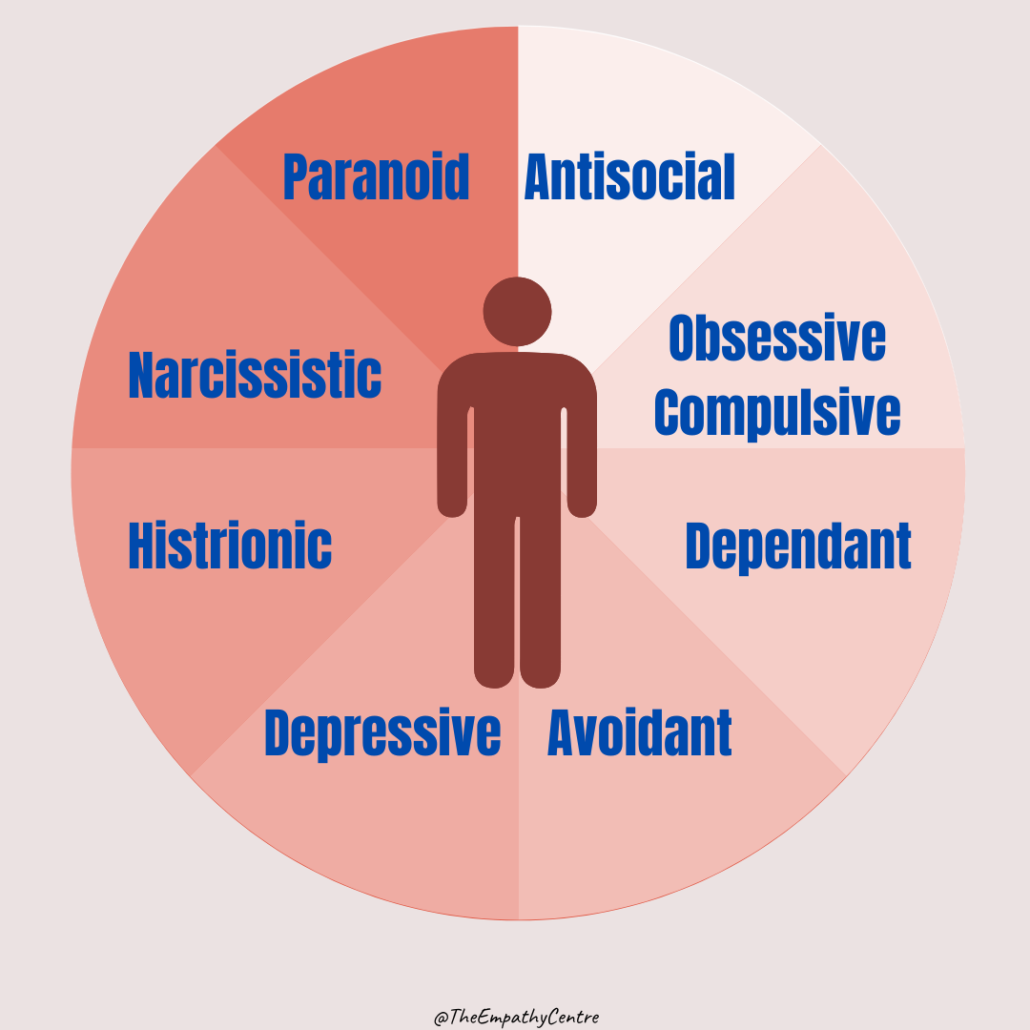
An estimated 4.4% of the adult population in the UK, or roughly one in 23 people, suffers from a personality disorder. Many of these individuals may remain undiagnosed, as access to specialist services for personality disorders is limited. In the United States, research suggests that approximately 9-15% of the adult population may suffer from some form of personality disorder. However, like in the UK, a significant number of these individuals remain undiagnosed, which could be due to stigma, lack of awareness, or limited access to mental health care services. In the Diagnostic and Statistical Manual of Mental Disorders, 5th edition (DSM-5) personality disorders are divided into three ‘clusters’ based on similar characteristics and behaviours, with each cluster representing different patterns of thinking and potential compulsions.
Cluster A: These disorders involve odd, eccentric thinking or behaviour and includes Paranoid Personality Disorder characterized by pervasive distrust and suspicion of others. Schizoid Personality Disorder can cause detachment from social relationships and limited emotional expression. Schizotypal Personality Disorder involves discomfort in close relationships, distorted thinking, and eccentric behaviour.
Cluster B: Involves dramatic, overly emotional, or unpredictable behaviours and includes Antisocial Personality Disorder characterized by disregard for the rights of others, impulsivity, and a lack of empathy. Borderline Personality Disorder involves instability in relationships, self-image, and emotions, with impulsivity and fear of abandonment. Histrionic Personality Disorder marked by excessive emotionality and attention-seeking behaviour. Narcissistic Personality Disorder characterized by grandiosity, a need for admiration, and a lack of empathy.
Cluster C: These disorders involve anxious, fearful thinking or behaviour, including Avoidant Personality Disorder characterized by feelings of inadequacy, extreme sensitivity to criticism, and social inhibition. Dependent Personality Disorder a pervasive need to be taken care of, leading to submissive and clingy behaviour. Obsessive-Compulsive Personality Disorder can manifest itself by a preoccupation with orderliness, perfectionism, and control (note that this differs from Obsessive-Compulsive Disorder, OCD).
These categories help clinicians better understand and diagnose personality disorders by grouping them based on similarities in behaviour and symptoms.
Identifying someone with a potential personality disorder can be challenging due to subtle traits appearing as typical human behaviours. People with a variety of mental health conditions can seek romantic relationships for various reasons, including validation, control, fear of abandonment, or fulfilling emotional needs. These motivations can vary depending on the disorder but are often rooted in emotional and psychological patterns:
Those with Narcissistic Personality Disorder frequently seek validation and admiration.
People with Borderline Personality Disorder may seek to escape feelings of emptiness and abandonment
Individuals who have Dependent Personality Disorders can seek security and stability.
Those with Obsessive-Compulsive Personality Disorders can seek control and order.
Individuals who have Antisocial Personality Disorders may seek power or material gain.
Coping mechanisms are strategies individuals use to manage stress, emotional challenges, or difficult situations. For people with personality disorders, these mechanisms often take on unique forms due to their distorted patterns of thinking, feeling, and behaving. In general, they may rely on maladaptive coping mechanisms which can include denial, projection, or avoidance. These coping mechanisms, while protective in the short term, often exacerbate interpersonal problems and emotional instability in the long term often leading to complex and dysfunctional dynamics.
Narcissists
“Narcissistic Personality Disorder is named after Narcissus, from Greek mythology, who fell in love with his own reflection. Freud used the term to describe persons who were self-absorbed, and psychoanalysts have focused on the Narcissist’s need to bolster his or her self-esteem through grandiose fantasy, exaggerated ambition, exhibitionism, and feelings of entitlement.” ― Donald W. Black, DSM-5 Guidebook: The Essential Companion to the Diagnostic and Statistical Manual of Mental Disorders
Narcissists, psychopaths, and sociopaths share certain personality traits, although there are distinct disorders with unique characteristics. One commonality is a lack of empathy, as all three exhibit an impaired ability to understand and connect with the experiences of others. They may disregard or manipulate others for personal gain, showing little remorse or guilt for their actions. Additionally, all three may exhibit grandiosity and an inflated sense of self-importance, seeking admiration and validation from others, impulsivity, and risk-taking behaviours, although Narcissists, while not always typically impulsive, may still engage in unwise activities if they believe it will enhance their self-image or serve their own interests. While there can be overlapping traits with each disorder, each has its own distinct set of diagnostic criteria. The level of potential danger and harm caused can vary within each category. A comprehensive evaluation by a qualified mental health professional is necessary to accurately diagnose and differentiate between these conditions. With regards to Narcissists, they can be found across every spectrum of social and economic strata, and many hold positions of influence or power. They often seem to be very successful or well-respected in their communities. They can also appear to be happy in their partnerships, married, and have families. But the pain, abuse, and suffering caused by individuals with a mix of highly toxic narcissistic personality traits are hidden behind closed doors and a very carefully crafted positive image. The Diagnostic and Statistical Manual of Mental Disorders (DSM-5) provides diagnostic criteria for Narcissistic Personality Disorder (NPD) based on the presence of specific traits. According to the DSM-5, a person must exhibit at least five of the following nine criteria to be diagnosed with NPD:
The Nine Official Characteristics of a Narcissist
Arrogant or haughty attitude. Displays an attitude of superiority and a condescending manner towards others.
Sense of entitlement. Expects unwavering compliance or favourable treatment from others.
Exploits others without guilt or remorse. Difficulties in maintaining satisfying and healthy relationships, often characterised by severe interpersonal mistreatment.
An intense need for admiration.
A belief that they are special and can only be understood by other exceptional people.
Exaggerated or grandiose sense of importance that is not evidenced by actual reality.
A preoccupation with fantasies of extraordinary success, wealth, power, beauty, or love.
Envious of others or assume others are envious of them.
Absence of empathy
They frequently possess good social skills and are often charming, charismatic, and full of energy, which helps them make a good first impression. However, Narcissists always have a motive when they entice someone into a fantasy, which is ultimately doomed to fail. Their motivation to become romantically involved with anyone has absolutely nothing to do with any genuine feelings of attraction or love because all of their “relationships” are purely transactional. The male narcissist generally seeks sex or a very attractive woman as a trophy and/or a provider; a female narcissist often pursues a potential partner to provide material gifts, sex, deeds of service, and/or an extravagant courtship that fulfils the initial fantasy of obtaining a ‘perfect’ love affair. Any romantic unions are solely used to boost their egos and provide sources of narcissistic supply, such as status, power, and, of course, sex. Narcissist Red Flags include:
Very charming and charismatic in public (especially when seeking to gain something), but highly critical, rude, and sarcastic in private to partners, close friends, or family members.
Arrogant attitude, with the belief they are infallible.
They believe the only opinion that matters is their own.
Chronic liar. Distorts facts to suit their own selfish agenda.
Multiple failed intimate partnerships.
The Narcissist controls, demeans, and manipulates so insidiously that victims often fail to understand they are actually being psychologically abused. Over a period of time, the result of this type of abuse is often a person who becomes energetically drained, confused, and damaged. There are people who never fully recover or who have even committed suicide due to this type of very dangerous abuse. In extreme cases, the partner of a a person with NPD may experience significant distress and potentially be at risk for various mental health challenges, including suicidal ideation. The experience with an extreme Narcissist can be very manipulative and psychologically damaging. The constant invalidation and exploitation from a narcissistic partner can result in their partner feeling trapped, hopeless, and overwhelmed. Over time, their self-esteem and sense of self-worth may become deeply eroded, leading to feelings of desperation and even suicidal thoughts.
Dating
“Narcissists have a tough job because perfection is viewed as either all or nothing: If you are not perfect, you are imperfect, and if you are imperfect, you are nothing.” ― Theodore Millon,Personality Disorders in Modern Life
These individuals are very efficient at targeting potential victims to manipulate; if you observe any of the personality traits mentioned along with other negative traits, pay attention and trust your intuition. Inevitably, being romantically involved with this type of person will become highly destructive. Avoid arguments, set personal limits, work on your assertiveness, and stop dating the person as soon as possible. I know from bitter personal experience what it feels like to be conned and manipulated; it can be very easy to make the mistake of beating yourself up for being severely misled. Narcissists generally have underdeveloped emotional intelligence and often throw toddler tantrums when they fail to get what they want. However, they also possess the intellect of an adult and understand very clearly how to manipulate and abuse. The Narcissist usually seeks a partner:
Who can cater to their desires.
That is willing to excessively stroke their ego.
A person who is easy to control and/or manipulate.
The malignant Narcissist is very cunning and dangerous, especially when it comes to intimate romantic connections, and can destroy the lives of their unsuspecting victims. Once a person understands the red flags to look out for, they will no longer be surprised or shocked by how these personality disordered types behave in their general interactions. Despite their frequent confident and arrogant demeanour, they are quite predictable once you understand their motivations, but still extremely dangerous. The mental and even physical abuse will be very subtle at first, with the real possibility of becoming very severe. Sadly, it often does not matter how strong an individual’s character may be at the beginning; if they decide to date a Narcissist he or she will eventually try to break that person down until they lose all sense of their own identity.
If you strongly suspect you are currently in a romantic involvement with a Narcissist, you will almost certainly understand that it has been a challenging and distressing situation. Being involved with a narcissistic abuser can evoke a range of intense and distressing experiences for the person being targeted. These feelings may include confusion, self-doubt, and a constant sense of ‘walking on eggshells.’ You may have experienced a rollercoaster of emotions, oscillating between moments of hope and despair, and felt manipulated, devalued, and invalidated, leading to a deep sense of diminished sense of self-worth. These feelings are very common in this type of scenario, with victims often struggling with a mix of fear, anxiety, and a constant need to please their partner to avoid conflict or retaliation. There may be feelings of being isolated as the abuser actively works to cut off their partner from their family and friends. Overall, being involved with a Narcissist can be an extremely draining and destabilising experience, leaving the victim feeling trapped, exhausted, and questioning their own reality. The following are several of your likely experiences:
Emotional Manipulation
Narcissists are usually very skilled at manipulating their partners’ to maintain control and power and can engage in Gaslighting, guilt trips, blame-shifting, or angry outbursts to control their partner.
Lack of Empathy & Validation
They have difficulty empathising with others and often prioritise their own needs and desires over their partners. It is likely your opinions and feelings have been dismissed or belittled, and your feelings, experiences, and concerns have been invalidated or trivialised. This lack of empathy has left you feeling unheard, unimportant, and neglected.
Exploitation & Entitlement
Often exploiting others for personal gain, they may take advantage of their partner’s resources, time, or support without reciprocation while possibly exhibiting a sense of entitlement, expecting their partner to fulfil their needs and desires without consideration for their partner’s well-being.
Constant Criticism & Devaluation
Narcissists may engage in a pattern of devaluing their partner, criticising their appearance, abilities, or achievements. This devaluation serves to maintain the narcissist’s sense of superiority and control. The partner may experience a constant barrage of negative comments, undermining their self-esteem and self-worth.
Intense Control & Power Dynamics
They often seek to exert control over their partners, dictating their actions, choices, and social interactions. Narcissists may isolate their partner from friends and family, monitor their activities, or exhibit possessive behaviour. This control serves to reinforce the narcissist’s dominance and diminish their partner’s independence.
Emotional Roller Coaster
A relationship with a Narcissist can be marked by frequent and extreme highs and lows who may engage in ‘Love Bombing’ during the initial stages, showering you with attention, affection, and compliments. However, devaluation and withdrawal of their affection typically follow this intense phase, creating confusion.
Diminished Self-Esteem & Self-Confidence
Over time, the constant criticism, manipulation, and devaluation from the extreme narcissist can erode the partner’s self-esteem and self-confidence. You may have started questioning your self-worth, feel constantly on edge, and struggle with a diminished sense of identity and autonomy.
These experiences may vary in intensity and presentation among individuals. Leaving a narcissistically abusive partner can be a challenging and complex process, but there are steps that can be taken to increase safety and minimise potential harm. First and foremost, prioritise your safety and well-being above all else. Gather evidence of the abuse, such as text messages or incidents, as this may be important for legal or protective purposes. Plan your exit carefully and discreetly, considering timing, logistics, and the availability of a safe place to stay. After leaving, set firm restrictions regarding contact or attempts to reconcile. Develop a safety plan that includes finding a safe place to go and informing trusted friends or family members about your situation. A domestic abuse organisation that can provide guidance and practical assistance throughout the process. Consulting with a therapist who specializes in this particular personality disorder can be very beneficial for partners of toxic narcissists, but realistically, speaking from personal experience, the prospects for a successful union are extremely bleak.
(C) Nigel Beckles
https://authornigelbeckles.com/wp-content/uploads/2022/11/logo-001-300x286.png00Nigel Beckleshttps://authornigelbeckles.com/wp-content/uploads/2022/11/logo-001-300x286.pngNigel Beckles2024-10-12 08:34:172024-10-12 11:05:28Relationships & Personality Disorders: Part 1
“Narcissists are consumed with maintaining a shallow false self to others. They’re emotionally crippled souls that are addicted to attention. Because of this they use a multitude of games, in order to receive adoration. Sadly, they are the most ungodly of God’s creations because they don’t show remorse for their actions, take steps to make amends or have empathy for others. They are morally bankrupt.” ― Shannon L. Alder, Author
The Creation
Childhood experiences play a significant role in the development of extreme narcissism in individuals. While the exact causes of Narcissistic Personality Disorder (NPD) are complex certain childhood experiences are commonly associated with the development of extreme narcissistic traits. One such experience is inconsistent or invalidating parenting, where carers fail to provide consistent love, support, and validation to the child. Inconsistent parenting can lead to feelings of insecurity and instability, as the child never knows what to expect from their caregivers. The lack of consistent emotional support can lead to the child developing a fragile sense of self-esteem and seeking external validation to fill the void. Neglect or emotional abuse can also contribute to the development of extreme narcissism; neglected or emotionally abused children may develop a deep-seated fear of abandonment and rejection, which prompts them to adopt narcissistic defences to shield themselves from further harm. They may learn to prioritise their own needs and desires above all else, viewing vulnerability or dependence on others as signs of weakness. Conversely, excessive praise or overindulgence by carers can contribute to the development of narcissistic traits. Constantly telling children they are special, unique, or superior to others may lead them to believe they deserve special treatment and admiration from others. Over indulgence can also foster a sense of entitlement and an inability to tolerate frustration or disappointment as the child becomes accustomed to having their every whim catered to by the parent(s).
Parental modelling plays a crucial role in shaping a child’s self-concept and interpersonal relationships. If a child grows up with narcissistic parents who model selfish, entitled, and manipulative behaviour, they may internalise these traits and adopt them as their own. Narcissistic parents may also project their own unmet needs and insecurities onto their children, expecting them to fulfil their emotional needs, which serves as a source of Narcissistic Supply which is essential for maintaining their grandiose self-image and protecting them from feelings of shame, insecurity, and inadequacy. Childhood experiences characterised by inconsistent or invalidating parenting, excessive praise or overindulgence, neglect or emotional abuse, and parental modelling of narcissistic behaviour often serve as the roots of extreme narcissism. These experiences can shape the child’s self-concept, interpersonal relationships, and worldview, leading to the development of maladaptive narcissistic traits and behaviours in adulthood.
Chronic Liars
“Pathological narcissists can lose touch with reality in subtle ways that become extremely dangerous over time. When they can’t let go of their need to be admired or recognized, they have to bend or invent a reality in which they remain special despite all messages to the contrary.” ― Bandy X Lee, The Dangerous Case of Donald Trump: 27 Psychiatrists and Mental Health Experts Assess a President
Narcissism exists on a spectrum, with some individuals displaying more extreme narcissistic traits than others. However, many people exhibit narcissistic traits such as grandiosity, entitlement, and a lack of empathy to varying degrees. They typically seek to maintain control and dominance, often at the expense of others. This behaviour serves to deflect attention away from the narcissist’s own insecurities and faults, allowing them to maintain their inflated sense of superiority and entitlement. While narcissists are relatively rare in the general population, individuals often exhibit narcissistic traits to varying degrees. Estimates place the prevalence of narcissists in the general population between 1% and 6%, with higher rates in certain professions or industries that reward grandiosity and self-promotion. Narcissists often tell lies repeatedly as a means of manipulating others and maintaining their pretence of superiority and perfection. They may exaggerate their accomplishments, talents, or abilities in order to garner admiration and validation from others or to cover up their own insecurities and shortcomings. Inventing false achievements and awards serves a similar purpose, allowing them to bolster their self-image and project an aura of success and accomplishment to others.
The false narratives created by narcissists serve several purposes. Firstly, they help to maintain the narcissist’s inflated sense of self-importance and superiority, allowing them to feel superior to others and maintain control over their environment. Secondly, they serve as a means of gaining attention, admiration, and validation from others, feeding the narcissist’s insatiable need for admiration and approval. Fake narratives allow narcissists to avoid feelings of shame, inadequacy, and vulnerability by projecting a false image of confidence, competence, and success to the world. They will tell lies consistently, invent false achievements and awards for themselves as a means of manipulating others, maintaining their pretence of superiority, and avoiding feelings of inadequacy and vulnerability.
Negative Impact on Relationships
“The lives of narcissists are built upon falsehoods. They show no concern for the harm caused by their lies, as empathy towards others is absent. This lack of empathy renders them highly perilous and untrustworthy.” ― Tracy Malone, Narcissistic Abuse Coach
Narcissists frequently engage in deceitful behaviours such as lying, manipulation, and Gaslighting to maintain control, bolster their self-image, and the constant dishonesty of a narcissist can have profoundly negative impacts on their personal relationships. When a narcissist consistently lies or distorts the truth, their partners and loved ones may become sceptical and question the reliability of their words and actions. This lack of trust undermines the foundation of the relationship and can lead to feelings of betrayal, resentment, and emotional distance. Narcissistic dishonesty also undermines communication and intimacy in relationships. Effective communication requires honesty, transparency, and vulnerability, but they often prioritise their own agenda and manipulate information to serve their own interests. This dishonesty creates barriers to authentic connection and prevents meaningful dialogue, leaving partners feeling misunderstood, invalidated, and emotionally disconnected. In addition, this dishonesty perpetuates a cycle of conflict and dysfunction; when a narcissist lies or denies reality to avoid accountability for their actions, it can lead to ongoing tension, arguments, and power struggles within the relationship. Partners may feel frustrated, deceived and invalidated by the narcissist’s refusal to acknowledge the truth, leading to increased resentment and hostility over time. An individual’s self-esteem, mental health, and sense of reality can suffer from constant exposure to lies, manipulation, and Gaslighting. Partners of narcissists may experience confusion, self-doubt, and emotional distress as they struggle to navigate the complexities of their relationship with a dishonest and manipulative partner.
The constant dishonesty of a Narcissist profoundly undermines trust, communication, intimacy, and emotional well-being in personal relationships. Partners of narcissists often find themselves trapped in a cycle of deception, manipulation, and conflict, unable to establish a foundation of trust and authenticity. Addressing narcissistic dishonesty requires recognising and confronting manipulative behaviours, setting boundaries, and seeking support from trusted individuals or professionals to navigate the complexities of the relationship. Having observed this type of behaviour myself, I have concluded there are zero positive benefits involved with associating with individuals who are clearly dishonest. If you suspect you have a Narcissist in your life, it is highly recommended that you either severely limit or completely terminate any further interaction.
Narcissistic Personality Disorder (NPD) is a psychological condition characterised by a pervasive pattern of grandiosity, a lack of empathy, and an intense need for admiration. Individuals with NPD often have an inflated sense of their own importance, a preoccupation with fantasies of unlimited success, and a belief that they are unique and entitled to special treatment. These traits can significantly impact their relationships and interactions with others, as they may exploit or manipulate those around them to meet their own needs. While not everyone with narcissistic traits meets the criteria for a clinical diagnosis of NPD, these traits can still exert a notable influence on their behaviour and the way they relate to the world. Often, they attempt to conceal their true personalities and intentions because they know being exposed for who they truly are will usually result in rejection. Understanding the dynamics of NPD and its variations in individuals can provide important insights regarding how these individuals interact with others. According to credible research and my experiences, when a Narcissist becomes aware that someone has figured them out or sees through their facade, their response can vary depending on the individual and the specific circumstances. Reactions to being exposed can include:
Defensive Denial
They may vehemently deny any accusations or insights that expose their true nature, becoming defensive, dismissive, or even counterattacking by attempting to discredit the person who has seen through their false image. Gaslighting techniques can be attempted to make the other person doubt their own perceptions and maintain control over the narrative.
Charm Offensive
In some cases, when a Narcissist realises that they have been exposed, they may try to win the person back by employing charm and manipulation. They may shower the individual with excessive compliments, promises of change, or gifts in an effort to regain their trust and admiration.
Discard and Disengage
If they believe that the person who has seen through their mask poses a threat to their grandiose self-image or could potentially expose them to others, they may choose to discard and distance themselves from that individual. This can involve abruptly ending the relationship, cutting off contact, or devaluing and demeaning the person to invalidate their insights.
Image Management
These individuals are highly concerned with their public image and may go to great lengths to protect it. If they sense that someone has figured them out, they may engage in damage control by spreading false narratives, twisting the truth, or seeking alliances with others who can help maintain their image and discredit the person who has uncovered their true nature.
Manipulative Tactics
Narcissists are skilled at manipulating others to serve their own agenda. If they believe that someone has seen through their manipulation tactics, they may alter their approach and employ different strategies to regain control and continue their narcissistic supply. This can involve playing the victim, using guilt or pity, or employing other emotional manipulation techniques.
Narcissistic Rage
The fear of losing their false sense of superiority and admiration from others is usually what triggers this extreme defensive mechanism. Narcissistic Rage is a strong and intense emotional reaction that occurs when their fragile self-image and grandiosity are threatened or when their true nature is exposed. This reaction can manifest in various ways, ranging from verbal outbursts and aggressive behaviours to manipulative tactics aimed at regaining control and dominance. When faced with the possibility of being seen as flawed or inferior, they often respond with extreme defensiveness, anger, and a need to reassert their superiority. This volatile reaction serves to protect their fragile egos and maintain the illusion they have created.
It is important to note that every Narcissist is unique, and their responses can vary depending on their specific personality traits, level of narcissistic traits, and the dynamics of the situation. Additionally, not all individuals with narcissistic tendencies will exhibit these exact behaviours, as personality traits can manifest differently in different people. Understanding their responses to the possibility of being exposed can help individuals who have discovered the truth navigate the situation with caution and self-care. It is strongly recommended that personal boundaries be established and enforced immediately. Seek support from trusted individuals and, if necessary, seek professional guidance when dealing with a suspected Narcissist.
We may request cookies to be set on your device. We use cookies to let us know when you visit our websites, how you interact with us, to enrich your user experience, and to customize your relationship with our website.
Click on the different category headings to find out more. You can also change some of your preferences. Note that blocking some types of cookies may impact your experience on our websites and the services we are able to offer.
Essential Website Cookies
These cookies are strictly necessary to provide you with services available through our website and to use some of its features.
Because these cookies are strictly necessary to deliver the website, refusing them will have impact how our site functions. You always can block or delete cookies by changing your browser settings and force blocking all cookies on this website. But this will always prompt you to accept/refuse cookies when revisiting our site.
We fully respect if you want to refuse cookies but to avoid asking you again and again kindly allow us to store a cookie for that. You are free to opt out any time or opt in for other cookies to get a better experience. If you refuse cookies we will remove all set cookies in our domain.
We provide you with a list of stored cookies on your computer in our domain so you can check what we stored. Due to security reasons we are not able to show or modify cookies from other domains. You can check these in your browser security settings.
Other external services
We also use different external services like Google Webfonts, Google Maps, and external Video providers. Since these providers may collect personal data like your IP address we allow you to block them here. Please be aware that this might heavily reduce the functionality and appearance of our site. Changes will take effect once you reload the page.
Google Webfont Settings:
Google Map Settings:
Google reCaptcha Settings:
Vimeo and Youtube video embeds:
Privacy Policy
You can read about our cookies and privacy settings in detail on our Privacy Policy Page.