
The Cycle of Narcissistic Abuse
“They are aware of what they are doing to others – but they do not care.”
― Sam Vaknin, Malignant Self-Love: Narcissism Revisited
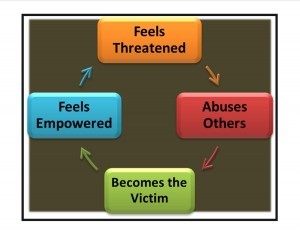
Narcissists are usually self-centred and unwilling to admit any mistakes alongside their constant need to be superior, right, or in charge. It is often the abused person who desperately tries to appease the narcissist which emboldens narcissistic behaviour even more, persuading them of their utter faultlessness. Any challenge to their authority generally restarts this cycle. Here is the general narcissistic abuse pattern of behaviour:
Feels Endangered
An upsetting event occurs, and the narcissist becomes concerned. It could be sex rejection, workplace disapproval, social embarrassment, envy of others’ success, or feelings of abandonment, neglect, or disrespect. The abuser becomes nervous as a result of the potential threat. They sense something is going to happen and begin to tread carefully around the narcissist. Most narcissists become agitated over the same underlying issues, whether they are real or imagined. They also have a proclivity to obsess over the threat repeatedly.
The Abuse Begins
The narcissist exhibits some form of abusive behaviour. Physical, mental, verbal, sexual, financial, spiritual, or emotional abuse can all occur. The abuse is tailored to intimidate the victim in an area of weakness, particularly if that area is one of strength for the narcissist. Abuse can last as little as a few minutes or as long as several hours. A combination of two types of abuse is sometimes used. A narcissist, for example, may begin with verbal belittling in order to exhaust the victim. Then they project their lying about an event onto the abused. Finally tired of the assault, the victim fights back defensively.
Becomes the Victim
The switchback occurs at this point. The abuser’s behaviour is used by the narcissist to prove that they are the ones being abused. The narcissist believes in their own twisted victimisation by recalling past defensive behaviours performed by the abused as if the abuse was initiated by the abused. Because the abuser feels remorse and guilt, they accept this distorted perception and attempt to save the narcissist. Giving in to what the narcissist wants, accepting unnecessary responsibility, appeasing the narcissist to keep the peace, and agreeing to the narcissistic lies are all examples of this.
Feels Powerful
The narcissist feels empowered once the abused person has given in or given up. This is all the justification the narcissist requires to demonstrate their superiority or rightness. The abuser has unknowingly fed the narcissistic ego, only to strengthen and embolden it. However, every narcissist has a weakness, and the power they feel now will only last until the next threat to their ego appears.

When the narcissistic cycle of abuse is understood, the abused person can break free. I have experienced this type of abuse from one of my parents in the past so completely understand how difficult it can be to cope with. My decision was to go totally No Contact. If you are a target of narcissistic abuse begin by devising strategies for future confrontations and understanding the limitations of the abuser. This cycle of abuse does not have to continue and definitely should not be tolerated under any circumstances. Seeking professional help and support is often required for individuals affected by a Narcissists abusive behaviour.
© Nigel Beckles
Reference: The Narcissistic Cycle of Abuse Christine Hammond